
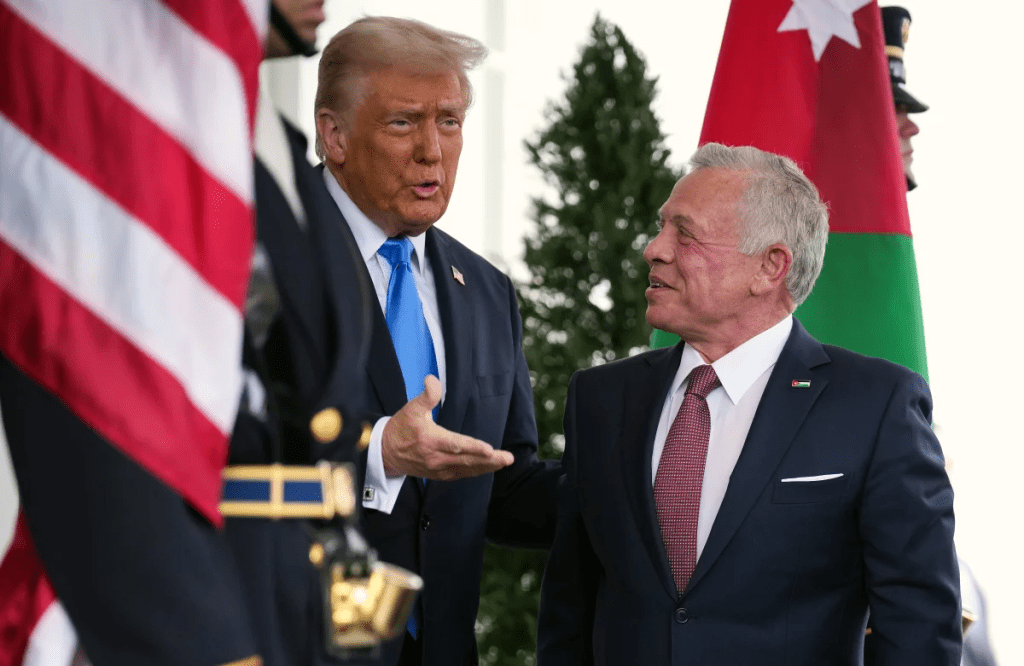
It was a bold idea – one that would shake the Middle East to its core. Standing before his supporters, US President Donald Trump unveiled his vision for Gaza: a plan to clear the war-torn land, relocate its people, and rebuild it into what he called the “Riviera of the Middle East.” A place of luxury, business, and prosperity – but for whom?
For the millions of Palestinians still suffering under blockade and conflict, this wasn’t a vision of hope. It was a nightmare. Trump’s plan wasn’t just about redevelopment; it was about control, and more importantly, about what best served American interests.
A Bold Proposal or a Dangerous Gamble?
Trump’s vision was grand. The United States, under his leadership, would assume ownership of Gaza, sweeping away the rubble and remnants of war. The land would be transformed into a dazzling economic hub, with five-star resorts and thriving businesses replacing what had long been a battleground.
But there was one glaring issue – what would happen to the people who called Gaza home?
His answer was simple: they would leave. Palestinians, already displaced numerous times throughout history, would be moved to neighbouring countries like Egypt and Jordan. Once relocated, they would have no right to return. Gaza, as they knew it, would no longer belong to them.
To Trump, this was a strategic solution – an opportunity to reshape the region while asserting US dominance. To the world, it looks like forced displacement.
The World Reacts
The response was swift and fierce.
In Gaza, the idea was met with outrage. Hamas, the ruling force in the region, condemned the plan, calling it a “recipe for chaos.” The Palestinian Authority, which governs the West Bank, also rejected it outright. To them, this was nothing less than an attempt to erase Palestinian identity from the map.
Beyond Palestine, Egypt and Jordan – two countries expected to absorb the displaced population – issued strong statements against the proposal. Jordan’s King Abdullah was particularly blunt, refusing to comply even under the threat of US aid cuts.
Meanwhile, the United Nations and other international bodies decried the plan as a violation of human rights. António Guterres, the UN Secretary-General, called it what it was: “ethnic cleansing.” Across the globe, condemnation poured in, but Trump remained undeterred.
The Bigger Picture: What’s in It for the US?
Why would Trump propose such a radical plan? The answer, as always in geopolitics, lies in power and economics.
Owning Gaza would give the US a foothold in one of the most volatile regions in the world. A controlled, American-backed Gaza could serve as a buffer between Israel and its adversaries. It could also present lucrative business opportunities for US companies involved in construction, security, and tourism.
Critics argue that this isn’t about helping Palestinians at all. Instead, it’s about serving American strategic interests while sidelining Palestinian sovereignty. The idea of forced relocation violates international law, yet Trump presents it as a practical solution – one that would benefit the US and its allies while ignoring the rights of the people affected.
A Future Uncertain
The world has rejected Trump’s plan, but the question remains: What’s next for Gaza? The region continues to struggle under blockade and war, and while Trump’s vision may be unrealistic, it highlights a troubling reality – Palestinians are often left out of the conversation about their own future.
As history has shown, foreign powers have long dictated the fate of this land, often without regard for those who live there. Whether Trump’s plan fades into irrelevance or sparks further conflict remains to be seen. But one thing is certain: for the people of Gaza, the fight for their home is far from over.
Written by Waheed Abu Araiz
 CrossBorders.Press
Leave a comment