
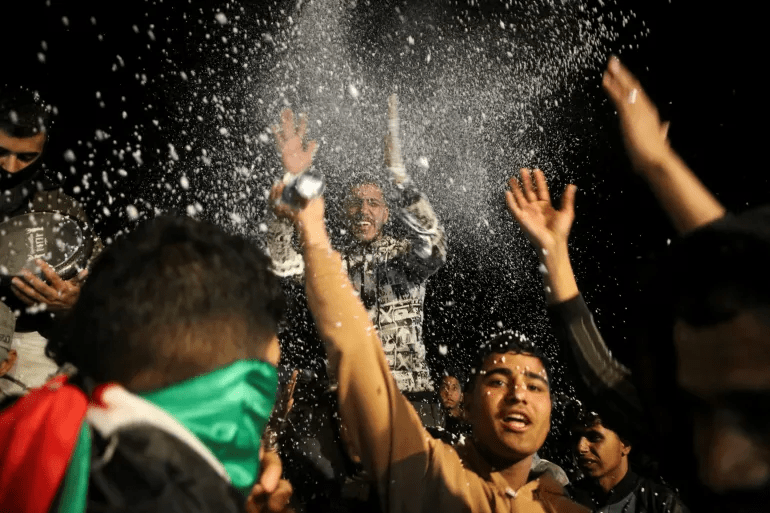
On the evening of Wednesday, 15 January 2025, a momentous announcement emerged: a ceasefire agreement had been reached in Gaza, accompanied by a prisoner exchange deal. For the people of Gaza, and indeed for Palestinians and Muslims around the world, the news sparked a wave of joy – a moment of collective exhalation, heavy with relief and hope. But this joy was tempered by apprehension, as memories of destruction, hunger, and fear lingered. Tragically, the optimism of the announcement was marred almost immediately; even after the ceasefire declaration, the violence persisted. Over 110 civilians have been killed since the deal was revealed, as Israel’s military operations continued unabated.
Rather than dissecting the intricate details of the ceasefire agreement between Israel and Hamas, it is perhaps more valuable to reflect on the broader implications of recent events – for Israel, for Palestine, and for the wider Middle East.
Israel has emerged from these events deeply shaken. Since the attack on 7 October 2024, it has become clear that the image of Israel’s military as invincible has been tarnished. A resistance force, equipped with rudimentary resources and operating in the confined space of Gaza – a mere 141 square miles – managed to hold its ground against one of the world’s most formidable armies. Despite being backed by the immense financial and military support of the United States, the United Kingdom, and European nations, Israel’s vulnerabilities were exposed. Billions of dollars and state-of-the-art technology could not prevent the cracks from showing.
Meanwhile, questions loom over the response – or lack thereof – from key regional players such as Egypt, Jordan, Turkey, and Pakistan. These nations, with their significant military capacities, stood by as the violence escalated into what many have described as a genocide. Instead of intervening, their leaders chose restraint, shackling their own militaries and keeping them from assisting the people of Gaza.
The frustration within these nations is palpable. One soldier, stationed in Port Said, Egypt, shared his disillusionment. “We train day and night, repeating marching chants against the Zionist enemy, and we hear newsletters boasting about how prepared the military is,” said Omar, speaking to Middle East Eye. “But when this enemy is killing thousands of our brothers, we sit idle. It is painful to know that you can help, but you are shackled and cannot rescue your people from being slaughtered.”

This war, and the suffering it has wrought, will be etched into the collective memory of Gaza and the wider world. Governments across the globe – from the United States and Europe to the leaders of the Muslim world – now face mounting scrutiny. While some actively supported Israel, providing weapons and financial backing, others stood silently by as innocent men, women, and children paid the ultimate price.
The ceasefire deal, though welcomed by the people of Gaza, is not a panacea. For those who have endured weeks of bombardment, the ceasefire brings hope but not a guarantee of security. The scars of this war will take far longer to heal than the ink on any treaty can promise. The people of Gaza remain trapped in a landscape of uncertainty, their lives shaped by the uneasy balance between fleeting relief and the shadow of ongoing conflict.
Written by Rizwan Abu Huthaifa
X: RizAbuHuthaifa
 CrossBorders.Press
Leave a comment