
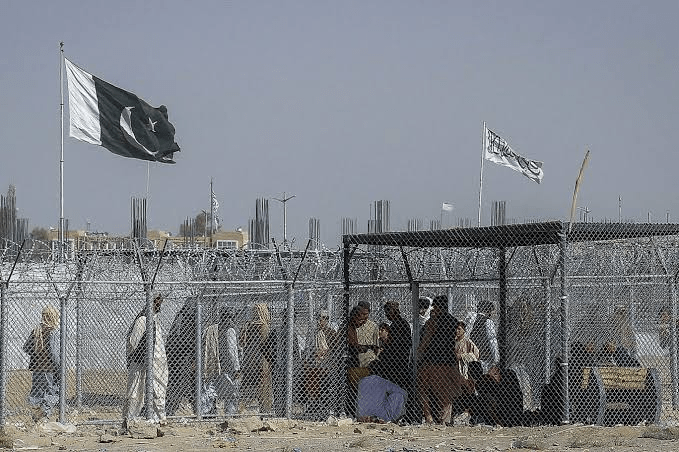
On December 24, 2024, the skies over Afghanistan’s Paktika province erupted with explosions as the Pakistani military launched airstrikes targeting alleged hideouts of the Tehrik-i-Taliban Pakistan (TTP), an armed group also referred to as the Pakistani Taliban. The strikes, confirmed by Pakistani security officials but left unaddressed by the military’s media wing, Inter-Services Public Relations (ISPR), or the Ministry of Foreign Affairs, reportedly hit the Barmal district near Pakistan’s South Waziristan tribal belt in Khyber Pakhtunkhwa province.
While officials in Pakistan remained tight-lipped, sources close to the matter revealed the raids to Al Jazeera. The response from Kabul was swift and grim. A spokesperson for the Taliban government reported that the strikes claimed the lives of at least 46 individuals, including women and children. This marked the second such assault this year, amplifying tensions between the two neighbouring countries.
The timing of the raids was striking. Just hours earlier, Pakistan’s special representative for Afghanistan, Mohammad Sadiq, had been in Kabul, meeting the Taliban’s interim Foreign Minister Amir Khan Muttaqi. Sadiq posted optimistically on X (formerly Twitter), stating, “Met Foreign Minister Amir Khan Muttaqi today. Held wide-ranging discussions. Agreed to work together to further strengthen bilateral cooperation and promote peace and progress in the region.” Yet, the airstrikes that followed painted a different narrative—one of deepening discord.
Pakistan has consistently justified its actions under the banner of combating “terrorism,” designating the TTP as a terrorist organisation and accusing the Afghan government of harbouring the group. However, this rationale is not without irony. During NATO’s 20-year presence in Afghanistan, Pakistan played a complex role, facilitating the movement of NATO supplies through its territory while also finding itself implicated in operations.
The fallout of this complex relationship is not limited to military actions. Afghan refugees in Pakistan now face a hostile environment, with police raids on their homes, confiscation of migration cards, and demands for their male relatives to report to authorities. These actions, coupled with the airstrikes, have strained relations further, not just between governments but also within the hearts of the people.
The deeper issue lies in the nationalist ideologies that have taken root, overshadowing the shared religious and cultural values of the region. Both Pakistan and Afghanistan, despite invoking shared principles of Islam, have allowed national interests to dominate, deepening divisions in the Muslim world. Be it republics or monarchies, states have prioritised borders over brotherhood, leaving ordinary citizens to bear the brunt of this fragmentation.
As tensions simmer, the path to peace appears fraught with challenges. The cries of those affected—be it in the skies over Paktika or the streets of Pakistan’s cities—are a stark reminder of the human cost of political and military manoeuvring.
Written by Rizwan Abu Huthaifa
X: RizAbuHuthaifa
 CrossBorders.Press
Leave a comment