
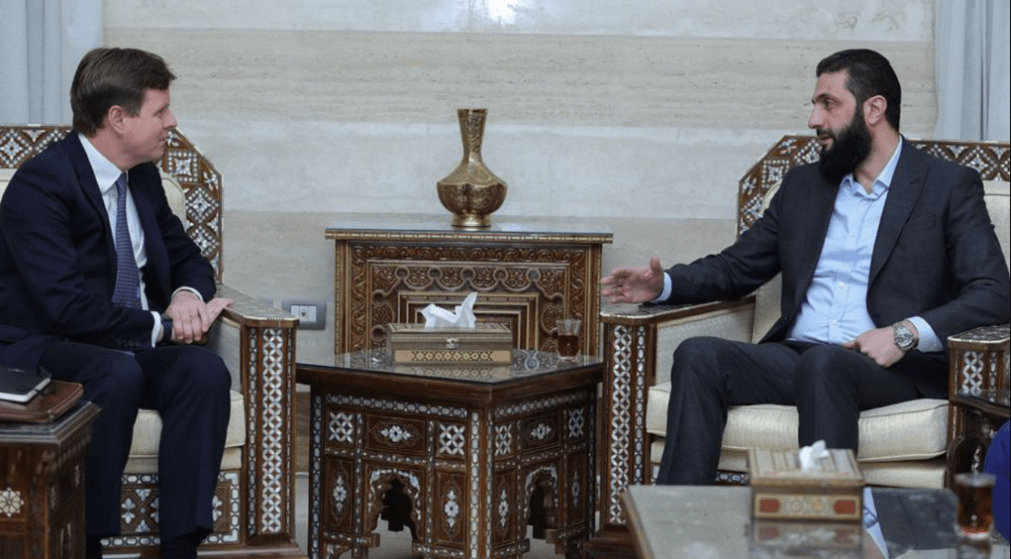
The streets of Damascus stirred with an unusual rhythm on Thursday, December 12. A high-ranking Turkish delegation, led by İbrahim Kalın, Turkey’s Head of Intelligence, stepped into the city’s historic precincts. Their mission: to meet with the leadership of the new authority in Syria. This was no ordinary visit; it marked the first international delegation to arrive in Damascus since the Assad regime crumbled. The move underscored Turkey’s pivotal role in shaping the Syrian question and hinted at the weighty diplomacy of the next chapter.
As if answering an unspoken call, a high-level British Foreign Office delegation soon followed. Stephen Hickey, Director of the Middle East and North Africa Department, accompanied by Anne Snow, Britain’s envoy to Syria, arrived in Damascus. It was the first official visit by a Western delegation since the regime’s fall—a moment layered with historical significance and political implications.
Then, in a striking development on 20 December 2024, the United States sent senior diplomats to Syria. Among them were Barbara Leaf, Assistant Secretary of State for Near Eastern Affairs; Daniel Rubinstein, former special envoy for Syria; and Roger Carstens, the Biden administration’s chief envoy for hostage negotiations. Their meeting with Ahmed al-Sharaa, leader of Hayat Tahrir al-Sham (HTS), delved into sensitive topics: political transition, counter-terrorism strategies, and the search for missing Americans, including journalist Austin Tice. It was the first U.S. diplomatic mission to Syria since the civil war’s early days, a testament to the shifting sands of power and influence in the region.
Yet, amidst the headlines and handshakes, the mood among Syrians was sceptical, even bitter. These visits, observers argued, were not gestures of solidarity or support for the Syrian revolution. Instead, they were motivated by fear—fear of chaos spiralling beyond control. Delegations came bearing agendas, investing resources, and appearing in calculated turns to ensure their interests remained safeguarded.
Meanwhile, the memory of Bashar al-Assad’s fall lingered like an acrid warning. The once-formidable leader, unmasked as a pawn in a larger game, had fled in disgrace. His flight was met with jeering crowds, an emblem of his humiliation after nearly 15 years of war, resilience, and sacrifice by the people of Syria. It was a moment heavy with lessons for those willing to learn: no dictator is invincible, no reign eternal.
But can Syrians afford to be swayed by the optics of international visits or the appearance of shifting alliances? For years, have they not borne the weight of foreign machinations and betrayals? What are the true intentions behind these renewed overtures—are they to aid, or to maintain control? After all the hard-earned lessons of the revolution, is it not crucial to question whether allowing Western influence back into Syria risks undoing the sacrifices made? How can Syrians ensure that history does not repeat itself, and that those once ousted are not allowed to re-enter through the back door?
The words of a defiant woman imprisoned in Saydnaya became a rallying cry for many. When confronted with foreign emissaries, she raised her shoe and asked, “Why have you come now? Where were you before?” Her act, simple yet profound, was a visceral reminder of the years of conspiracy and neglect that had shaped Syria’s plight.

As delegations continued their careful choreography, Syrians stood firm, wary of the veiled intentions behind the smiles. The legacy of their revolution was one of blood, resilience, and unyielding determination. If the visiting powers sought to manipulate the future, they would find a nation unbroken, its spirit forged in the crucible of sacrifice.
Bashar al-Assad is gone, and the people of Syria and the wider Muslim world have every reason to celebrate. Yet, amidst the joy, a shadow looms. Can the sacrifices of the revolution be undone by a mere change of faces? From what I understand, they are in the process of changing the constitution, and the former leadership seems to have disappeared from the scene.—but what if it stays a secular state in disguise, designed to exclude Islam from its rightful place in governance?
As the world watches, the question remains: will the future government reflect the beliefs and sacrifices of the people, or will it be shaped by the hands of those who stood against them? The heart of Syria beats strong, but who will guard its future?
Written by Rizwan Abu Huthaifa
X: RizAbuHuthaifa
 CrossBorders.Press
Leave a comment