
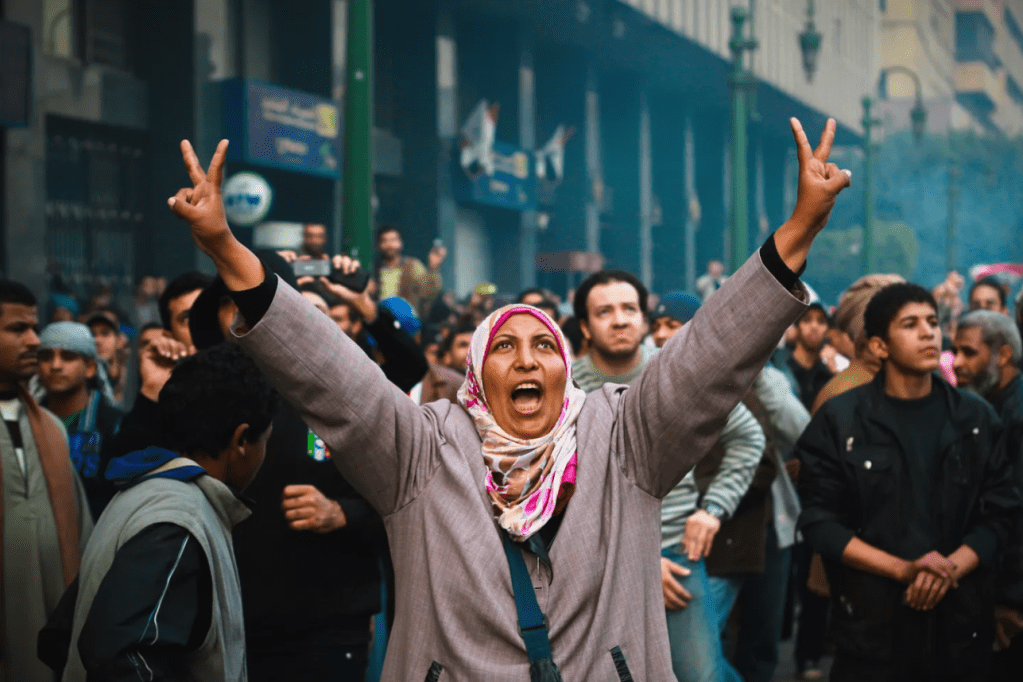
Syria stands at a pivotal juncture, with the potential fall of President Bashar al-Assad promising significant change. However, the experiences of Egypt, Tunisia, Libya, and Yemen during the Arab Spring offer cautionary tales of how initial revolutionary successes can devolve into instability and conflict.
Egypt: A Cycle of Revolution and Repression
In 2011, Egyptians ousted President Hosni Mubarak after 30 years of rule, igniting hopes for democratic reform. The subsequent election of Mohamed Morsi marked a brief democratic period. However, in 2013, a military coup led by General Abdel Fattah el-Sisi removed Morsi, resulting in a government more repressive than its predecessor. This regression underscores the challenges of sustaining democratic gains amid political turbulence.
Tunisia: Fragile Democratic Gains
Tunisia is often viewed as the Arab Spring’s sole success, with the 2011 ousting of President Zine El Abidine Ben Ali leading to democratic reforms. Despite this progress, Tunisia faces economic hardships and political instability. The recent re-election of President Kais Saied, amid low voter turnout and the imprisonment of opposition figures, raises concerns about the durability of its democratic institutions.
Libya: Descent into Chaos
The 2011 NATO-backed removal of Muammar Gaddafi plunged Libya into turmoil. Lacking strong institutions, the country fragmented into rival factions, leading to ongoing civil war and humanitarian crises. Foreign interventions have further complicated the conflict, highlighting the dangers of external involvement without a cohesive national framework.
Yemen: A Humanitarian Catastrophe
Yemen’s 2011 uprising against President Ali Abdullah Saleh escalated into a multifaceted civil war. Regional powers, including Saudi Arabia and Iran, have intervened, exacerbating the conflict and causing one of the world’s worst humanitarian disasters. This situation illustrates how internal strife can become a proxy battleground for external interests.

Lessons for Syria
These cases demonstrate that toppling an autocratic leader is merely the first step toward stability. The absence of unified leadership and inclusive governance can lead to power vacuums, inviting foreign interference and prolonging conflict. For Syria, fostering national unity and establishing robust institutions are crucial to prevent a similar descent into chaos.
The Perils of Foreign Interference
Foreign involvement in post-revolutionary states often serves external agendas rather than domestic well-being. In Libya, NATO’s intervention lacked a plan for post-Gaddafi stability, leading to prolonged conflict. In Yemen, regional rivalries have intensified the war, worsening the humanitarian crisis. These examples underscore the importance of prioritizing national sovereignty and caution against reliance on foreign powers.
The Imperative of Inclusive Governance
Sustainable peace requires inclusive governance that represents all societal segments. In Egypt, the exclusion of certain political groups led to renewed authoritarianism. Tunisia’s political fragility highlights the need for continuous commitment to democratic principles. Syria must learn from these experiences by promoting inclusivity and protecting democratic processes to achieve lasting stability.
In conclusion, while Syria’s potential transition offers hope, the lessons from other Arab Spring nations emphasize the necessity of unity, cautious engagement with foreign actors, and the establishment of inclusive governance structures to ensure a peaceful and prosperous future.
Written by Waheed Abu Araiz
 CrossBorders.Press
Leave a comment