

Syria’s Struggle for Renewal: A Nation at a Crossroads
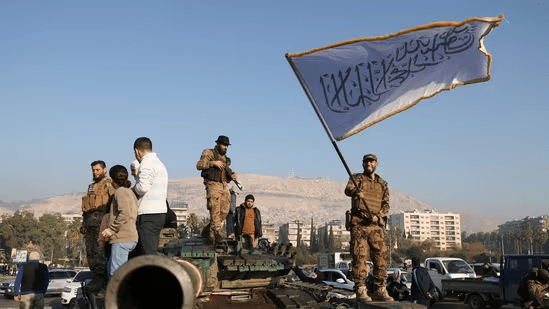
In November 2024, a rapid and decisive offensive reshaped the Syrian conflict. Hayat Tahrir al-Sham (HTS) seized control of major cities, including Aleppo and Hama, before capturing Damascus, forcing President Bashar al-Assad to flee to Russia. With Assad ousted, HTS leader Abu Mohammed al-Jolani, also known as Ahmed al-Shara’a, has emerged as a key figure in shaping Syria’s political future.
What Sparked the Sudden Escalation?
The offensive did not occur in isolation. Turkey’s recent military actions, initially intended as a disciplinary warning to Assad, escalated into a broader campaign. Turkish President Recep Tayyip Erdoğan, frustrated by Assad’s refusal to engage in normalisation talks facilitated by Russian President Vladimir Putin, opted for a more aggressive stance. Despite Erdoğan’s invitation for a meeting, Assad demanded the withdrawal of Turkish forces from northern Syria, delaying negotiations and deepening the rift.
Russian Foreign Minister Sergey Lavrov confirmed Assad’s demands, noting that the presence of Turkish forces in northern Syria remained the primary obstacle to progress. This impasse reportedly led Erdoğan to authorise allied groups to launch an offensive. Opposition sources linked to Turkish intelligence confirmed Turkey’s involvement, highlighting the regional complexity of the conflict.
A Nation in Turmoil
What began as an effort to secure de-escalation zones around Idlib quickly expanded. Assad’s refusal to engage politically galvanised discontented Syrians, many of whom were already suffering under years of oppression. The weakened Syrian army, plagued by low morale and dwindling loyalty, withdrew from key positions, allowing opposition forces to advance rapidly.
Within just ten days, the offensive swept through Aleppo, Hama, Homs, and ultimately Damascus, marking a dramatic shift in Syria’s power dynamics. This rapid progression underscores both the widespread dissatisfaction with Assad’s regime and the fragility of its foundations.
International Reactions and Uncertainty
The United States appeared unsurprised by the developments. National Security Advisor Jake Sullivan noted, “It was no surprise that armed opposition fighters would try to take advantage of the situation.” While expressing no immediate alarm, the White House stated it was “closely monitoring the situation” and maintaining communication with regional allies.
Sean Savett, spokesman for the US National Security Council, reiterated America’s position: “The United States, together with its partners and allies, urge de-escalation, protection of civilians and minority groups, and a serious and credible political process consistent with UNSCR 2254.” Meanwhile, Erdoğan described Syria as entering “a new phase,” though the specifics of any proposed political solution remain ambiguous.
What Lies Ahead for Syria?
The unfolding conflict raises critical questions: Will Syrians shape their future independently, or will external forces dictate the outcome? On the ground, the involvement of multiple factions suggests a potential shift toward a coalition government. Such an arrangement could include regional self-governance, similar to Iraq’s semi-autonomous Kurdish region, to balance competing interests and stabilise the nation.
For a people who have endured 13 years of war, the stakes are monumental. This struggle is not merely about toppling a regime but dismantling the corrupt political system, its constitution, security apparatus, and military institutions that have long oppressed Syrians. To ensure lasting change, any new government must prioritise the aspirations of its citizens’ core beliefs, free from external interference. The lessons of incomplete revolutions in Egypt, Tunisia, Libya, and Yemen serve as cautionary tales of the perils of compromise.
A Call for Complete Transformation
Syria now stands at a critical juncture. The sacrifices of its people must not be in vain. A comprehensive transformation—rooted in justice and reflecting the will of the Syrian population—is essential to avoid repeating the failures of past uprisings. Only through such a fundamental shift can Syria hope to achieve a future of peace, dignity, and stability.
Written by Rizwan Abu Huthaifa
X: RizAbuHuthaifa
 CrossBorders.Press
Leave a comment