
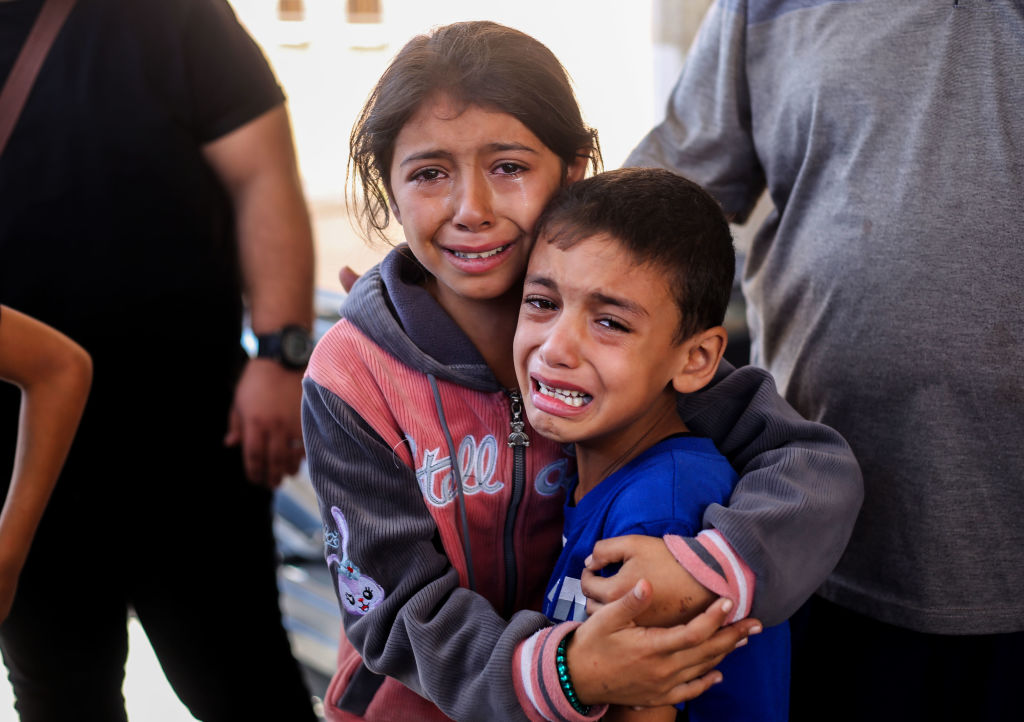
The global stage frequently bears witness to the exhibition of double standards, particularly in the responses of certain governments to international conflicts. This issue was recently highlighted by two notable incidents: the International Court of Justice (ICJ) ruling concerning Israel, initiated by South Africa on December 29, 2023, and the unfounded allegations by Israel regarding the United Nations Relief and Works Agency for Palestine Refugees (UNRWA) purportedly having connections with Hamas. These events underscore the stark and unabashed inconsistencies in the Western nations’ commitment to justice and accountability, revealing a selective approach to international law and human rights.
“The double standards of those governments… are the bigger threat to human rights right now.” Agnes Callamard, the head of Amnesty International, has criticized the Western response to the conflicts in Ukraine and Gaza.
Let’s recall the initial stages of the conflict in Ukraine, where media commentators, journalists, and political figures faced accusations of hypocrisy. They utilised their platforms not only to praise Ukraine’s military resistance against Russian forces but also to express their shock at the occurrence of such a conflict in what they described as a “civilised” nation.
In February 2022, Charlie D’Agata, the senior correspondent for CBS News based in Kyiv, stated: “This isn’t a place, with all due respect, like Iraq or Afghanistan that has seen conflict raging for decades. This is a relatively civilised, relatively European – I have to choose those words carefully, too – city where you wouldn’t expect that, or hope that it’s going to happen.”
His remarks sparked a backlash of derision and outrage on social media, where numerous individuals highlighted how his statements perpetuated the further dehumanisation of non-white, non-European individuals enduring conflict, as portrayed by mainstream media.
In December 2023, South Africa approached the International Court of Justice (ICJ), requesting an advisory opinion on the legal ramifications of Israel’s actions in the Gaza Strip, which, according to South Africa, include genocide, 75 years of apartheid, a 56-year occupation, and a 16-year blockade. Despite accumulating evidence of Israel’s breaches of international law, including violations of the Genocide Convention, the United States and European nations have shown reluctance to act, effectively disregarding the ICJ’s rulings. Some countries, notably Germany, have even provided support and backing to Israel.
In contrast, Israel’s recent accusations against the United Nations Relief and Works Agency (UNRWA), alleging ties with Hamas and complicity in the events of October 7th, have prompted immediate criticism and decisive measures from various nations. Despite the absence of concrete evidence, Israel’s allegations swiftly led to direct sanctions against UNRWA. France, Germany, Italy, and the Netherlands have halted their financial contributions to UNRWA, with the UK demanding a firm assurance that UNRWA does not employ individuals labelled as ‘terrorists’ before it considers resuming funding. Additionally, the European Commission has issued an official statement announcing that future financial support for UNRWA will be subject to review and that a comprehensive investigation is warranted to ensure neither the organization nor its staff were involved in the attacks.

The marked inconsistency in responses and the selective enforcement of principles, as evidenced by the actions of Western countries in each case, has not only drawn global attention but also significantly eroded the trust in these nations.
Philip Luther of Amnesty International highlighted the significant but selective global response to the Ukraine-Russia conflict with VOA in 2023. “They didn’t exhibit the same or show the same treatment to those fleeing war and aggression in other places — war in Syria or in Afghanistan, or violence in Haiti when it came to the U.S.”
Yet, such behavior and reactions should hardly be unexpected. The so-called international community, encompassing bodies like the ICJ and UNRWA, among many others, has its origins in the Peace of Westphalia treaties signed in 1648. These treaties inaugurated a new political order in Europe and established the foundations for modern diplomacy and international relations, all designed to support the prevailing global hierarchy and safeguard their sovereignty.
Written by Rizwan Abu Huthaifa
 CrossBorders.Press
Leave a comment