
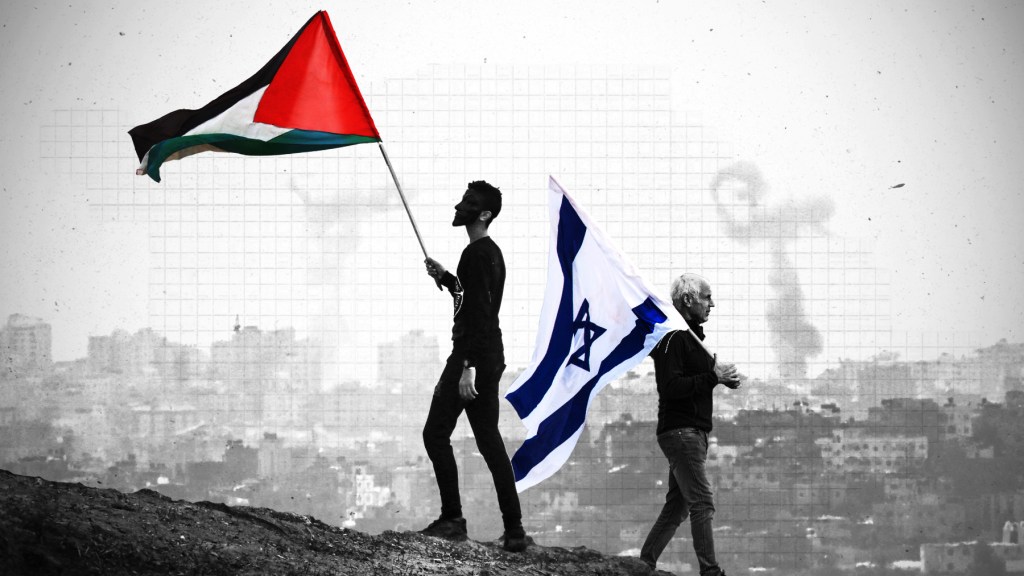
In a significant statement made after his visit to Israel in late January, British Foreign Secretary David Cameron revealed on Friday that Prime Minister Benjamin Netanyahu has “not ruled out comprehensively a two-state solution.” This comment comes at a critical juncture, as the recent Israel-Hamas conflict has reignited the discussion around the two-state resolution for the longstanding Israeli-Palestinian issue. Despite years of stalled negotiations, this approach continues to be backed by various countries, including the United States, as a potential avenue for peace.
The U.S. strategy in the Middle East seems to involve collaboration with regional allies like Egyptian President Abdel Fatah el-Sisi and Turkish President Tayyip Erdogan. El-Sisi, in particular, has been proactive, suggesting a demilitarized Palestinian state as a practical solution to the Israel-Palestine conflict. He has proposed this concept twice during the ongoing Gaza war and also endorsed the idea of deploying international forces from entities like NATO or a joint force comprising the U.S., Europe, and Arab nations. These propositions were publicly articulated by el-Sisi in two press conferences: the first with German Chancellor Olaf Scholz on October 18, 2023, and the second with the Prime Ministers of Belgium and Spain on November 24, 2023.
The idea of a demilitarized Palestinian state is not a recent innovation. Ariel Sharon, the then Israeli Prime Minister, proposed a similar concept in 2001, suggesting border monitoring by Israeli Occupation Forces instead of international forces. Netanyahu also expressed his openness to a demilitarized Palestinian state, with the condition that it recognizes Israel as the national state of the Jewish people. The Israeli Foreign Minister between 2013 and 2014 supported the notion of a demilitarized state, albeit opposing the presence of international forces.
The Palestinian Authority has historically been receptive to the idea of a demilitarized Palestinian state, as evident from Mahmoud Abbas’s statements. In 2013, Abbas told Haaretz, “The Palestinian state will be demilitarized.” In a 2014 interview with the New York Times, he elaborated, “The Palestinian state will not have its own army, but only a police force.” Furthermore, in 2018, Abbas conveyed to an Israeli delegation his agreement to a demilitarized Palestinian state without an army or regular military force, proposing a lightly armed police force with batons not even pistols.
On the other hand, Erdogan has proposed the creation of a ‘security structure in Gaza,’ with Turkey playing a significant role. He has been discussing this idea with international and regional parties to develop it further. This proposal is in line with Turkish Foreign Minister Mevlut Cavusoglu’s suggestion of an “international protection mechanism” during an emergency meeting of the Organisation of Islamic Cooperation (OIC).
An often-overlooked aspect is the role of Muslim rulers in the region. Some critics argue that these leaders have, through action or inaction, been complicit in the ongoing occupation of Palestine. This complicity could be seen in diplomatic silence, economic ties with powers involved in the occupation, or a lack of substantial support for Palestine in removing the occupation.
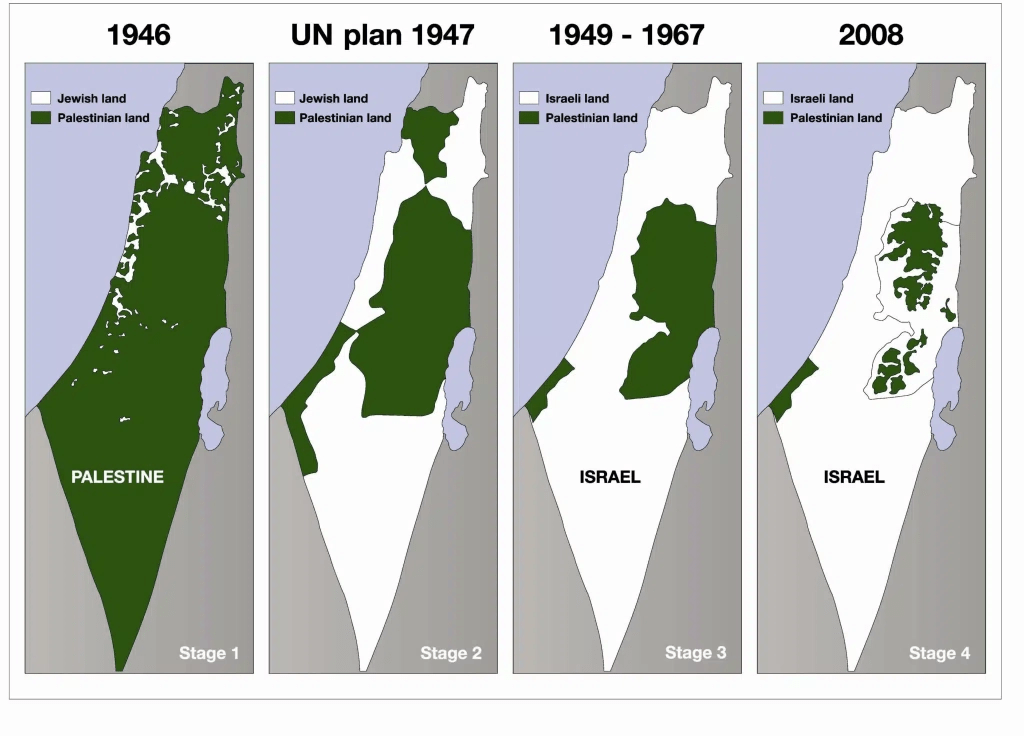
In examining the proposed two-state solution, which suggests the establishment of a Palestinian state within the 1967 borders, questions arise about the fairness of such an arrangement. This proposal effectively allocates around 80% of the historic Palestinian lands to Israel, leaving Palestinians with just a fifth of their ancestral territory. The plan appears to legitimize the aftermath of historical conflicts, including land acquisition, demolition of homes, widespread violence, and the displacement of people, all under the banner of occupation. Critics argue that this approach may inadvertently sanction past acts of aggression and the ongoing suppression of Palestinian rights by Israel. This sentiment has been echoed in journalistic circles, where the ‘two-state’ solution is often seen as a superficial remedy to a complex and deeply rooted conflict.
Moreover, the viability of the envisaged Palestinian state is under scrutiny. The state is proposed to be demilitarized, stripping it of any means of armed resistance, which could leave it vulnerable to future territorial claims by Israel. Israeli Prime Minister Benjamin Netanyahu, in a statement last February, implied that such a Palestinian state would lack full sovereignty, with limited control over its security, borders, airspace, military, and economic independence. This raises concerns about the state’s dependency on Israel for its basic survival, casting doubts on the nature of its autonomy. Adding to these complications is the presence of over 600,000 Jewish settlers and numerous settlements in the West Bank, some resembling full-fledged urban areas with their own infrastructure, making the practical realization of a Palestinian state increasingly challenging. This perspective was highlighted by Craig Mokhiber, former UN High Commissioner for Human Rights, who characterized the two-state solution for Palestine as an unrealistic notion within UN corridors, critiqued for neglecting the essential human rights of the Palestinian people.
The proposed two-state solution raises concerns about the potential marginalization of Palestinians, who might find themselves under the significant influence and control of Israel. This arrangement could lead to scenarios where Palestinians face the risk of displacement or further exclusion from their remaining territories in Palestine.
Written by Rizwan Abu Huthaifa
 CrossBorders.Press
Leave a comment