
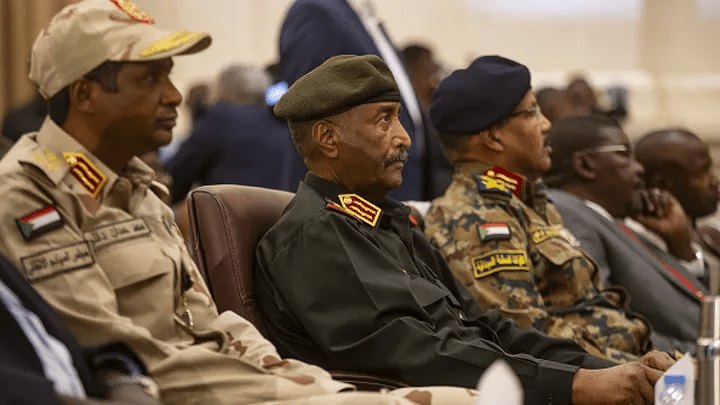
The Escalating Conflict in Sudan: A Global Geopolitical Chessboard
Recent events in Sudan, characterized by escalating clashes between the national army and the Rapid Support Forces (RSF), transcend mere domestic unrest. They epitomize a battleground for international geopolitical tactics, involving key global players such as the United States, the United Kingdom, and regional powers.
U.S. Involvement and Allied Strategies
The United States has been actively involved in Sudan, particularly through its backing of figures like Al-Burhan and Hemedti. The multifaceted American strategy includes:
- Redefining Power Equilibrium: The U.S. is possibly engineering a new power-sharing framework, aiming to curtail European influence and strengthen its own proxies.
- Considering Sudan’s Potential Partition: The American passive stance towards Sudan’s division, reminiscent of its approach in South Sudan, is apparent. A possible outcome might see Darfur under Hemedti’s reign, a reflection of the U.S.’s divide-and-conquer tactic.
- Tactical Play: The U.S. might be positioning European-aligned forces against its own allies, using this rivalry to alter the existing power structures.
Key Developments under U.S. Influence
Since April 15, 2023, several developments have highlighted the significant U.S. influence:
- Establishment of the Jeddah Platform: This conflict resolution initiative, influenced by both American and Saudi interests, seems to reduce British and Emirati roles in the region.
- IGAD Summit Boycott: The Sudanese army’s refusal to attend the IGAD summit, influenced by British-aligned Kenya, signals a growing geopolitical rift.
- Al-Burhan’s Diplomatic Endeavors: His international visits, notably to Egypt, indicate efforts to consolidate power with U.S. backing.
The Rising Influence of the Rapid Support Forces
The RSF’s territorial expansions in East Darfur and other key areas suggest a reshaping of Sudan’s political landscape. Under Hemedti’s command, these advancements align with the broader U.S. strategy to establish the RSF as a primary political and military power.
Sudanese Army’s Urban Strategy
Parallel to the RSF’s movements, the Sudanese army, under Al-Burhan, is fortifying its urban presence, especially in Khartoum. This approach is likely a balancing act in response to the growing influence of the RSF.
IGAD’s Peacemaking Efforts
The recent IGAD summit in Djibouti, which saw participation from Al-Burhan and indirect involvement from Hemedti, marks a pivotal step towards a ceasefire. The involvement of various global actors, including the African Union, the UN, and regional countries, underscores a collective endeavor for stability.
The Future of Sudan: A Strategic Chess Game
While an immediate split of Sudan seems improbable, the U.S. actions indicate preparations for potential future partitions that align with its strategic interests. The RSF, now a formidable political entity, may lead the opposition against the regime, potentially becoming Sudan’s primary opposition force. This scenario could result in two dominant power centers: the RSF, equipped politically and militarily, and the Sudanese army, each serving different aspects of American strategic interests.
Sudan’s current turmoil is a stark reminder of how local conflicts are often magnified and manipulated by global powers. The intricate interplay of American, British, and regional influences not only moulds the present conflict but also paves the path for Sudan’s future political landscape. Amidst these complex international geopolitical dynamics, the pursuit of enduring peace and stability in Sudan remains a challenging yet crucial endeavor.
R.P.
The opinions presented in this article are solely those of the author and may not represent the editorial position of CrossBordersPress
 CrossBorders.Press
Leave a comment